









Delivery has become an essential part of convenience retail. Customers increasingly expect groceries, snacks, drinks, and household essentials to arrive quickly at their door. For convenience store owners, delivery creates new revenue opportunities and helps compete with larger retailers.
However, one important decision remains: should you rely on third-party delivery marketplaces, build your own delivery channel, or use a combination of both?
Many retailers start with platforms such as Deliveroo, Uber Eats, Just Eat, or Snappy Shopper because they provide immediate access to customers. While these marketplaces can generate orders quickly, they also introduce challenges that can affect profitability and customer retention.
White label delivery offers an alternative approach by allowing stores to create their own direct ordering channel while maintaining control over pricing, customer relationships, and brand experience.
Understanding the strengths and weaknesses of each model can help convenience store owners choose the right strategy for long-term success.
What Is Marketplace Delivery?
Marketplace delivery refers to third-party platforms that connect retailers with customers through a shared app or website.
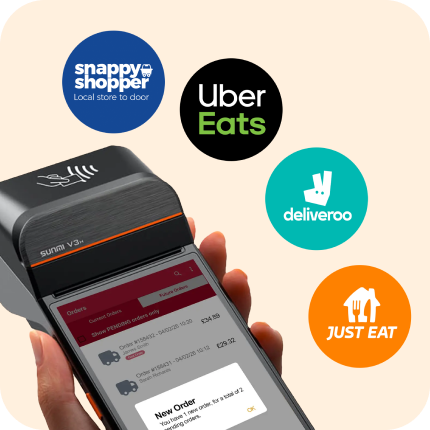
Examples include:
Deliveroo
Uber Eats
Just Eat
Snappy Shopper
Customers browse products through the marketplace and place orders directly on the platform.
The marketplace handles customer acquisition and provides access to a large audience.
Advantages of Marketplace Delivery
Immediate Customer Reach
One of the biggest benefits is visibility.
New stores can quickly gain exposure to thousands of potential customers without investing heavily in marketing.
Faster Market Entry
Stores can begin accepting delivery orders relatively quickly.
There is no need to develop a website, mobile app, or ordering system from scratch.
Increased Brand Awareness
Marketplace platforms can introduce your store to customers who may not have discovered your business otherwise.
Customer Convenience
Many customers already have delivery apps installed and prefer using familiar platforms.
Challenges of Marketplace Delivery
While marketplaces offer convenience, they also create several challenges.
High Commission Costs
Delivery platforms charge commissions on orders.
These fees can significantly reduce profit margins if pricing is not managed correctly.
Limited Customer Ownership
The platform owns much of the customer relationship.
You often receive limited customer data and have fewer opportunities to build long-term loyalty.
Increased Competition
Customers viewing your store can also see competing retailers selling similar products.
This creates constant competition for attention and orders.
Pricing Pressure
Many competitors use aggressive promotions and discounts to attract customers.
This can create pressure to reduce prices and sacrifice profitability.
What Is White Label Delivery?
White label delivery allows convenience stores to operate their own branded ordering channel.
Customers order directly from the retailer rather than through a marketplace.
The store maintains control over:
Branding
Customer experience
Pricing
Promotions
Customer data
White label delivery creates a direct relationship between the retailer and customer.
Advantages of White Label Delivery
Greater Margin Protection
Without marketplace commissions, stores retain more revenue from each order.
This can significantly improve profitability over time.
Full Customer Ownership
Retailers gain access to valuable customer data and purchasing behaviour.
This information can be used to create targeted marketing campaigns and loyalty programmes.
Stronger Customer Loyalty
Customers interact directly with your brand rather than a third-party platform.
This increases the likelihood of repeat purchases.
More Pricing Control
Retailers can implement pricing strategies without being influenced by marketplace structures or commission models.
Improved Brand Recognition
Every interaction reinforces your store’s identity and strengthens customer relationships.
Challenges of White Label Delivery
White label delivery also requires investment and planning.
Customer Acquisition Responsibility
Unlike marketplaces, retailers must generate traffic and attract customers themselves.
Marketing Investment
Successful direct ordering channels often require:
Social media marketing
Email campaigns
Loyalty programmes
Local advertising
Ongoing Management
Retailers need systems and processes to manage delivery efficiently.
Which Model Is More Profitable?
Profitability depends on how delivery is managed.
Marketplace delivery may generate more immediate order volume, but commission fees can reduce margins.
White label delivery typically produces stronger margins because retailers keep a larger share of each sale.
For many convenience stores, the most effective strategy is combining both approaches.
Marketplace platforms help acquire new customers while white label delivery encourages repeat orders through a direct channel.
Why Many Convenience Stores Use Both
The most successful retailers often use marketplaces and white label delivery together.
Marketplace platforms provide visibility and customer acquisition.
White label delivery helps convert occasional customers into loyal repeat buyers.
This balanced approach allows stores to:
Reach more customers
Protect margins
Build customer loyalty
Reduce dependency on marketplaces
The Role of Delivery Aggregation
Managing multiple delivery channels can become complicated.
Many retailers struggle with:
Multiple tablets
Different pricing structures
Product inconsistencies
Manual updates
Order management challenges
Delivery aggregation solves these problems by bringing all platforms into one system.
Benefits include:
Centralised order management
Platform-specific pricing
Automated menu updates
Reduced admin workload
Improved operational efficiency
This allows stores to scale delivery without creating additional complexity.
Signs Your Store Needs a Better Delivery Strategy
You may need to review your delivery setup if:
Delivery margins continue to decline
Staff spend too much time managing platforms
Pricing is inconsistent across marketplaces
Order errors are increasing
Customer retention is low
Delivery administration is becoming difficult to manage
These challenges often indicate a lack of operational control.
Building a Sustainable Delivery Business
Long-term delivery success depends on more than simply joining additional platforms.
Successful convenience stores focus on:
Margin protection
Operational efficiency
Customer retention
Platform management
Pricing strategy
Direct customer relationships
The stores achieving the strongest results are not necessarily those with the most platforms. They are the ones with the most control.
Final Thoughts
Marketplace delivery and white label delivery each offer unique advantages. Marketplaces provide visibility and customer acquisition, while white label delivery delivers stronger margins, customer ownership, and long-term loyalty.
Rather than choosing one over the other, many convenience stores benefit from a strategy that combines both approaches. By using marketplaces to attract customers and a direct ordering channel to retain them, retailers can create a more profitable and sustainable delivery operation.
The key is ensuring delivery remains controlled, efficient, and commercially viable as your business grows.